

SEO used to be about guessing what the bot wanted; now it's about making the bot work for you before the searcher even types a query. I've spent a decade chasing algorithms, but the shift we've seen in the last two years has changed the math for everyone.
To improve AI for SEO rankings, marketers must use machine learning to automate data-heavy tasks like keyword clustering, technical auditing, and content optimization. By 2026, the most effective approach combines generative AI for drafting with human-led E-E-A-T verification to ensure content meets search engine quality standards while scaling organic visibility.
I’ve learned the hard way that clicking "generate" isn't a strategy. The first time I let an early AI model write a batch of 50 landing pages without a human eye, Google flattened my traffic within a month. It was a painful lesson in why we need a "human-in-the-loop" system that uses AI for speed but keeps humans for the soul of the content.

Key takeaways
- AI automates high-volume tasks like keyword clustering and meta tag generation to save hundreds of hours.
- Semantic search optimization via NLP tools is essential for ranking in AI-driven search overviews.
- Technical SEO audits powered by machine learning can identify crawl errors and performance bottlenecks in real-time.
- Human oversight remains critical to ensure AI-generated content maintains high E-E-A-T signals.
- Predictive analytics now allow SEOs to target trends months before they hit peak search volume.
How is AI changing the search landscape in 2026?
Search is no longer just a list of blue links; it's a conversation where AI Overviews (SGE) summarize the web for the user. I remember when we just had to worry about ranking #1, but now the goal is often being the primary source that the AI cites in its summary.
User behavior has shifted toward long-form, natural language questions rather than fragmented keywords. This means your content has to understand intent at a molecular level, or you’ll find your traffic dropping even if your "rankings" look okay on paper.
Back in the day, we fought over two-word phrases like "coffee maker." In 2026, people are asking their phones, "What’s the best quiet espresso machine for a small apartment under five hundred dollars?" AI helps us catch these queries by understanding the context behind them.
Google’s bots are faster now because they use AI to decide what’s worth crawling. If your site looks like generic AI filler, the bot might not even bother spending its crawl budget on you. I’ve seen sites get indexed in minutes because their content structure was perfectly optimized for AI consumption.
1. Surfer SEO: Master topical authority with real-time SERP data
In 2026, you can't just write a good article; you have to write the "most complete" article. I used to spend hours manually checking the top 10 results to see what subheadings they used, but this tool does that in about thirty seconds, showing you exactly which terms are missing from your draft.
What it is and standout features
Surfer SEO is a content optimization platform that uses Natural Language Processing (NLP) to analyze search engine results pages (SERPs). Its standout feature is the Content Editor, which gives you a real-time score as you write, suggesting keywords, image counts, and heading structures based on what is currently ranking.
Who it's for
This is for content writers and SEO managers who want a data-backed roadmap for every piece they publish. It’s particularly useful for niche sites trying to build topical authority without guessing what "quality content" looks like to a bot.
Pricing
Plans typically start around $89 per month for basic features, scaling up to $399 for larger teams needing high-volume audits.
Honest drawbacks
It’s very easy to become a slave to the "score." I’ve seen writers ruin the flow of a great story just to squeeze in a keyword the tool suggested. If you chase a 100/100 score too aggressively, your content can end up sounding like a robot wrote it for another robot.
2. Ahrefs: Automate keyword clustering at a massive scale
I remember the days of sorting 10,000 keywords in Excel using "Find and Replace" to group them. It was soul-crushing work. Now, the AI features in Ahrefs handle that grouping automatically, letting you see the "parent topic" for thousands of long-tail phrases instantly.
What it is and standout features
Ahrefs is a comprehensive SEO suite, but its AI-driven Keyword Explorer is where the magic happens. It uses machine learning to cluster keywords by intent, showing you how one page can rank for hundreds of variations. The "Parent Topic" feature is a lifesaver for site architecture.
Who it's for
This is the industry standard for serious SEO pros and agency owners. If you are doing deep competitor research or building out a content calendar for a new site, this is the first tab you should open.
Pricing
Entry-level plans start at $99, but most pros will need the $199 or $399 tiers to get the full power of the data exports.
Honest drawbacks
The credit system they introduced can be frustrating. You might find yourself "rationing" your clicks because you don't want to hit your limit halfway through the month. Also, the UI has become quite dense over the years, making it intimidating for beginners.
3. MarketMuse: Identify semantic gaps before competitors do
The first time I used MarketMuse, it told me my "comprehensive" guide to home brewing was missing a section on water chemistry. I hadn't even thought of it. After adding that section, the page jumped from page three to the top of page one in two weeks.
What it is and standout features
MarketMuse is an AI content planning and optimization tool that focuses on "topic modeling." It compares your site's content against the entire web to find "information gaps." Its standout feature is the Inventory tool, which audits your whole site to tell you which pages need an update.
Who it's for
Enterprise SEOs and content strategists managing large domains. It’s perfect for those who need to prove the ROI of a content refresh rather than just constantly churning out new posts.
Pricing
They have a limited free version, but the standard tier is around $149/month. The premium enterprise features can cost thousands annually.
Honest drawbacks
The tool is "heavy." It takes a while to process data, and the learning curve is steep. It also tends to suggest a very high word count for every topic, which isn't always what the user actually wants.

4. Semrush: Predict search trends months in advance
Being first to a trend is better than being "best" to a trend sometimes. I’ve used Semrush’s predictive data to spot rising interest in specific tech niches in early 2026 before the big news sites even had a draft ready. That lead time is worth its weight in gold.
What it is and standout features
Semrush is an all-in-one marketing suite. Its AI Writing Assistant and Keyword Magic Tool are the highlights. It uses historical data and current social signals to forecast search volume trends, helping you catch the wave before it peaks.
Who it's for
In-house marketing teams who need to handle SEO, PPC, and social media in one place. It’s the "Swiss Army Knife" of the industry.
Pricing
Pro plans start at $129, with Guru plans at $249 and Business at $499 per month.
Honest drawbacks
Because it tries to do everything, some of the tools feel a bit "surface-level" compared to specialized software. The backlink data, while good, often lags behind Ahrefs in my experience.
5. Clearscope: Align content with user intent perfectly
Clearscope is the tool I give to my writers who hate "SEO tools." It’s clean, it’s simple, and it doesn't get in the way. It focuses on making sure you're using the language that searchers expect to see, which is the heart of NLP in 2026.
What it is and standout features
Clearscope is a content optimization platform that grades your content for "relevance." Its Google Docs and WordPress integrations are seamless. The standout feature is the "Term Map," which shows you how frequently your competitors are using specific concepts.
Who it's for
Editorial teams and high-end freelance writers. It’s built for people who care about the craft of writing but want to make sure their work actually gets seen.
Pricing
It’s on the pricier side, starting at $170 per month for the Essentials plan.
Honest drawbacks
It doesn't provide much in the way of technical SEO or backlink data. It is strictly a content tool. If you need a full suite, you’ll have to pair this with something else, which doubles your software bill.
6. Screaming Frog: Run AI-powered technical audits
I once missed a single "noindex" tag on a category page that cost a client five figures in sales. If I'd had the modern AI-integrated version of the "Frog" back then, it would have flagged the anomaly in the crawl pattern immediately. It's the most essential tool in my kit.
What it is and standout features
Screaming Frog is a desktop-based website crawler. In 2026, it now includes AI features that can automatically write meta descriptions for thousands of pages or flag "near-duplicate" content that a standard crawler might miss. Its log file analysis is also top-tier.
Who it's for
Technical SEOs and developers. If you are managing a site with more than 500 pages, you simply cannot do your job effectively without this tool.
Pricing
There is a free version for up to 500 URLs. The paid license is roughly $259 per year, which is the best value in SEO.
Honest drawbacks
It’s not a "cloud" tool (unless you set it up on a server), so it uses your computer's RAM. If you're crawling a massive site on an old laptop, it will crash. The interface also looks like it was designed in 1998.
7. Jasper: Scale meta tags and headers without the fluff
I once had to write 1,200 unique meta descriptions for a shoe retailer. It was a nightmare. I used Jasper to create a "Brand Voice" profile, and it knocked out the whole list in an afternoon. The best part? The CTR actually went up because the AI stayed consistent.
What it is and standout features
Jasper is a generative AI platform built for marketing. Its "Brand Voice" feature allows you to upload your style guide so the AI doesn't sound like a generic bot. It’s excellent for high-volume tasks like product descriptions and ad copy.
Who it's for
E-commerce managers and social media teams. Anyone who needs to produce a high volume of short-form copy that needs to stay "on-brand."
Pricing
Plans start at $49/month for individuals, with team plans around $125/month.
Honest drawbacks
If you don't give it enough context, it "hallucinates" facts. I’ve seen it invent features for products that don't exist. You absolutely must have a human check every line it produces.

8. Claude 4: Enrich content with nuanced human-like reasoning
When I need a "first draft" that doesn't feel like a high school essay, I turn to Claude. In 2026, its ability to follow complex instructions is miles ahead of other models. I use it to take a rough transcript of an expert interview and turn it into a structured, SEO-friendly article.
What it is and standout features
Claude is a large language model by Anthropic. Its standout feature is its massive "context window," meaning you can feed it a 50-page PDF and ask it to find the SEO opportunities within. It is much better at "reasoning" than just "predicting the next word."
Who it's for
Strategic content creators and researchers. It’s the best tool for "Human+AI" collaboration where you need the AI to actually understand the nuances of a topic.
Pricing
Free to use with limits; the "Pro" version is $20 per month.
Honest drawbacks
It can be overly "polite" and wordy. It often adds unnecessary intros and outros like "Certainly! Here is the information you requested," which you have to manually strip out every single time.
9. RankMath: Automate Schema markup for rich snippets
Schema used to be a manual coding chore. If you missed a comma, the whole thing broke. RankMath’s AI-driven Schema generator reads my post and builds the JSON-LD code instantly. Seeing those "Review Stars" pop up in the search results a week later is always a win.
What it is and standout features
RankMath is a WordPress SEO plugin. Its "Content AI" module suggests related keywords and questions as you write. The standout feature is the Schema Pro integration, which handles everything from "Recipe" to "How-to" markup automatically.
Who it's for
WordPress users, from bloggers to small business owners. It’s the most powerful "all-in-one" plugin available for the platform right now.
Pricing
The base plugin is free. The Pro version starts at $59 per year, which is very affordable for what it offers.
Honest drawbacks
It has a lot of features, which can lead to "plugin bloat" if you aren't careful. If you turn on every single module, it can slow down your WordPress dashboard slightly.
10. BrightLocal: Analyze local review sentiment automatically
If you have 50 locations, you can't read every review. I used BrightLocal’s AI to find a recurring complaint about "parking" at a client’s suburban locations. We fixed the signage, mentioned it in the local descriptions, and saw a 20% jump in "Get Directions" clicks.
What it is and standout features
BrightLocal is a local SEO platform. Its AI tools specialize in "Sentiment Analysis," scanning hundreds of reviews to tell you what people actually love (or hate) about your business. It also automates the process of finding and fixing local citations.
Who it's for
Multi-location businesses and local SEO agencies. If you live and die by the "Map Pack," this is your command center.
Pricing
Plans start at $39/month, scaling up based on the number of locations you are managing.
Honest drawbacks
The "Citation Builder" service is great but can be slow. It’s a manual process on their end to update some directories, so don't expect overnight results for your NAP (Name, Address, Phone) consistency.
11. Alli AI: Deploy bulk on-page fixes without a developer
I once worked with a client whose dev team had a six-month backlog. We couldn't even change a title tag. I used Alli AI to "overlay" the changes on the site, fixing 400 pages of SEO errors in one afternoon. It’s like a magic wand for technical debt.
What it is and standout features
Alli AI is a "Live SEO" platform. You install a small snippet of code, and it allows you to make SEO changes (titles, tags, Schema) directly through their dashboard without touching your CMS. Its standout feature is the "Auto-Optimize" which suggests and deploys fixes automatically.
Who it's for
Agencies working with clients who have slow development cycles. It’s a lifesaver for showing "quick wins" while waiting for the dev team to catch up.
Pricing
It’s an investment, starting at $249 per month for the consultant plan.
Honest drawbacks
It’s an "overlay," not a permanent fix in your database. If you stop paying for the tool, all your SEO changes disappear. It’s a bridge, not a final destination.
12. LinkStorm: Discover internal linking opportunities in seconds
Internal links are the most underrated ranking factor. I spent years using "site:search" on Google to find pages to link together. LinkStorm uses AI to map the semantic relationship between all your pages and gives you a list of "missing links" that actually make sense.
What it is and standout features
LinkStorm is an internal link auditing tool. It crawls your site and uses NLP to find anchor text opportunities you might have missed. The standout feature is the "Link Opportunity" report, which ranks suggestions by how much they will help your authority flow.
Who it's for
Affiliate marketers and content-heavy publishers. If you have a blog with hundreds of posts, this tool will find thousands of ways to better connect them.
Pricing
Starts at around $30/month for smaller sites, making it very accessible.
Honest drawbacks
It can sometimes suggest links that are technically related but don't make sense for the "user journey." You still need to manually approve the links to ensure you aren't sending people to irrelevant pages.
13. Sitebulb: Visualize crawl budget and site health
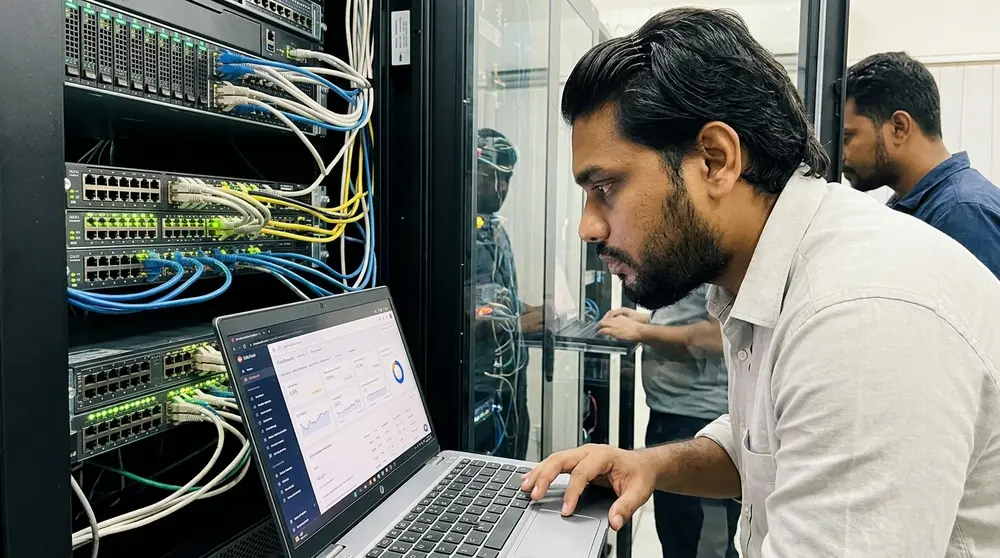
Sitebulb doesn't just give you a list of errors; it gives you a map. I used it to show a client how their "infinite scroll" was creating a crawl trap that was eating up 90% of Google’s attention. Seeing it visually made the problem—and the solution—obvious to everyone.
What it is and standout features
Sitebulb is a website auditing tool that excels at "Data Visualization." Its AI "Hints" system tells you exactly why a certain issue matters. The "Crawl Map" is its best feature, showing you exactly how authority is flowing (or getting stuck) across your site.
Who it's for
SEO consultants who need to present complex data to non-technical stakeholders. It makes "boring" technical audits look like a work of art.
Pricing
Desktop version is about $13.50/month, while the Cloud version is around $35/month.
Honest drawbacks
The audits can take a long time to run on very large sites. It’s so thorough that it can sometimes feel like "information overload" if you don't know which metrics to prioritize.
14. Perplexity: Analyze SGE and AI Overview performance
In 2026, we don't just care about Google; we care about "Answer Engines." I use Perplexity to see how AI summarizes my niche. If my site isn't being cited in the "Sources" section, I know my content isn't structured clearly enough for the bots to digest.
What it is and standout features
Perplexity is an AI-powered search engine. For SEOs, it’s a research tool to see how modern LLMs interpret your brand. The "Pro" version allows you to toggle between different models (like GPT-5 or Claude 4) to see how various AIs "see" your content.
Who it's for
Forward-thinking SEOs who are optimizing for "Generative Search." It’s essential for understanding how to win the "zero-click" search battle.
Pricing
Free for basic search; $20/month for the Pro features and model switching.
Honest drawbacks
It’s not a traditional "SEO tool." There are no keyword volume charts or backlink checkers. It’s strictly for understanding the "output" of the AI search world.
15. Midjourney: Optimize for visual search and original assets
Google recognizes stock photos. If you use the same "person at a laptop" photo as everyone else, you get zero "visual authority." I use Midjourney to create unique, hyper-relevant diagrams and hero images that the AI recognizes as original content.
What it is and standout features
Midjourney is an AI image generation tool. In an SEO context, it allows you to create high-quality, original assets that help you rank in Google Image Search and Lens. Its "Style Reference" feature ensures all your site’s images have a consistent, professional look.
Who it's for
Bloggers and designers who want to avoid the "stock photo" look. It’s for anyone who understands that "Visual SEO" is a major traffic driver in 2026.
Pricing
Plans start at $10/month, but the $30/month "Standard" plan is better for high-volume creators.
Honest drawbacks
It’s still mostly managed through Discord, which is a clunky interface for a professional tool. Also, getting text to look right inside images can still be a struggle, though it's getting better.
16. Frase: Map search intent to automated content briefs
The hardest part of managing writers is making sure they actually answer the searcher's question. Frase scans the top 20 results and builds a brief that includes every question found in "People Also Ask." It takes the guesswork out of the editorial process.
What it is and standout features
Frase is an AI writing and research tool. Its standout feature is the "Content Brief" generator, which pulls in data from Reddit, Quora, and Google to show you what people are actually asking. Its AI writer is also specifically tuned for SEO, not just general prose.
Who it's for
Content managers who oversee a team of freelancers. It ensures that every draft that comes back to you is already optimized for the right intent.
Pricing
Starts at $15/month for the Solo plan, with Team plans at $115/month.
Honest drawbacks
The AI writer can sometimes be a bit repetitive. It tends to follow the same "intro-point-point-conclusion" structure every time, which can make a blog feel a bit formulaic if you don't edit for flair.
17. Google Search Console: Leverage AI-driven performance insights
GSC is the only "source of truth" we have left. In 2026, the new "Insights" tab uses machine learning to tell you *why* your traffic dropped. It might say, "You lost 3 positions for 'espresso machines' because a competitor added more video content." That's actionable data.
What it is and standout features
Google Search Console is a free tool from Google. The 2026 AI updates include "Anomaly Detection" and "Trend Spotting." It alerts you to technical issues before they become disasters and shows you which "long-tail" queries are starting to gain traction.
Who it's for
Literally everyone with a website. If you don't have this set up, you are flying blind. It is the most important tool for monitoring your actual relationship with the search engine.
Pricing
Completely free.
Honest drawbacks
The data is often delayed by 48 hours. It also doesn't show you what your competitors are doing; it only shows you your own performance. It’s a "rearview mirror," not a "windshield."
18. ChatGPT (GPT-5): Build custom SEO agents for specific tasks
I built a "Custom GPT" that specifically audits my site’s internal links against a set of rules I created over a decade. Now, I just upload a CSV, and it tells me what to fix. This "agentic" SEO is the final frontier of the industry.
What it is and standout features
ChatGPT is the world's most famous AI. In 2026, the GPT-5 model allows for "Custom GPTs" that can be connected to live web data. You can build an agent that only does "Schema Audits" or one that only writes "Local News Hooks."
Who it's for
Advanced SEOs who want to build their own proprietary tools. It’s for the "tinkerer" who wants to automate the boring parts of their specific workflow.
Pricing
Free version available; Plus version is $20/month.
Honest drawbacks
It’s a generalist tool. Unless you are very good at "prompting" and giving it the right data, it will give you generic advice. It requires a lot of "hand-holding" to get expert-level results.
Comparison of the top 18 AI SEO tools
Choosing the right tool depends on where your site is currently struggling. If your content is great but you aren't ranking, you likely need a technical tool. If your site is technically perfect but "stale," you need a generative or semantic tool.
| Tool Name | Primary Strength | Best For |
|---|---|---|
| Surfer SEO | On-Page Scoring | Individual Article Optimization |
| Ahrefs | Keyword/Link Data | Competitive Research |
| MarketMuse | Topic Modeling | Enterprise Content Strategy |
| Semrush | All-in-One Suite | Full Marketing Teams |
| Clearscope | NLP Relevance | High-End Editorial Teams |
| Screaming Frog | Technical Auditing | Deep Site Health Checks |
| Jasper | Bulk Copywriting | E-commerce/Social Media |
| Claude 4 | Reasoning/Drafting | Complex Long-Form Content |
| RankMath | WordPress SEO | Small Business/Bloggers |
| BrightLocal | Local Search | Multi-Location Brands |
| Alli AI | Live Deployment | Speeding up Dev Cycles |
| LinkStorm | Internal Linking | Improving Site Architecture |
| Sitebulb | Visual Audits | Consultants/Stakeholders |
| Perplexity | SGE Analysis | AI Search Optimization |
| Midjourney | Original Visuals | Image SEO/Visual Search |
| Frase | Content Briefs | Managing Freelance Teams |
| Google Search Console | Direct Google Data | Performance Monitoring |
| ChatGPT (GPT-5) | Custom Automation | Advanced SEO Tinkerers |

Final recommendations: Which tool should you buy first?
If you are just starting out, don't buy ten tools. You’ll end up with "analysis paralysis" and a very expensive credit card bill. I’ve seen too many people spend more time looking at charts than actually publishing content.
For the **Solo Blogger or Freelancer**, I recommend starting with **RankMath (Free)** and **Claude 4**. This gives you the technical foundation and a powerful writing assistant for under $20 a month. It’s the most cost-effective way to get skin in the game.
For the **Agency Owner or Growing Brand**, you need the big guns. **Ahrefs** for the data and **Surfer SEO** for the workflow. These two tools are the "industry standard" for a reason—they work, and they scale. If you can only afford one, go with Ahrefs; the data is irreplaceable.
For the **Technical SEO or Enterprise Manager**, your first stop is **Screaming Frog**. It’s the only tool that gives you the "raw" truth about how a bot sees your site. Pair it with **Sitebulb** for the visualization, and you’ll be able to fix problems that your competitors don't even know they have.
The future of SEO isn't human vs. machine; it's the human who knows how to direct the machine versus the one who doesn't. Master the tools, but never lose your voice, because that's the only thing the bots can't replicate in 2026.
Frequently asked questions
Does Google penalize AI-generated content in 2026?
What is the best AI tool for SEO rankings right now?
Can AI completely automate an SEO strategy?
About the author
I'm MD Nazmul — a builder and founder from Bangladesh. For almost ten years I lived in marketing: SEO, paid ads and growth, earning Top Rated status on Upwork and Fiverr. …
Leave a comment